Manila to Bali Currency Guide: Navigating PHP to IDR for the Discerning Filipino Traveler
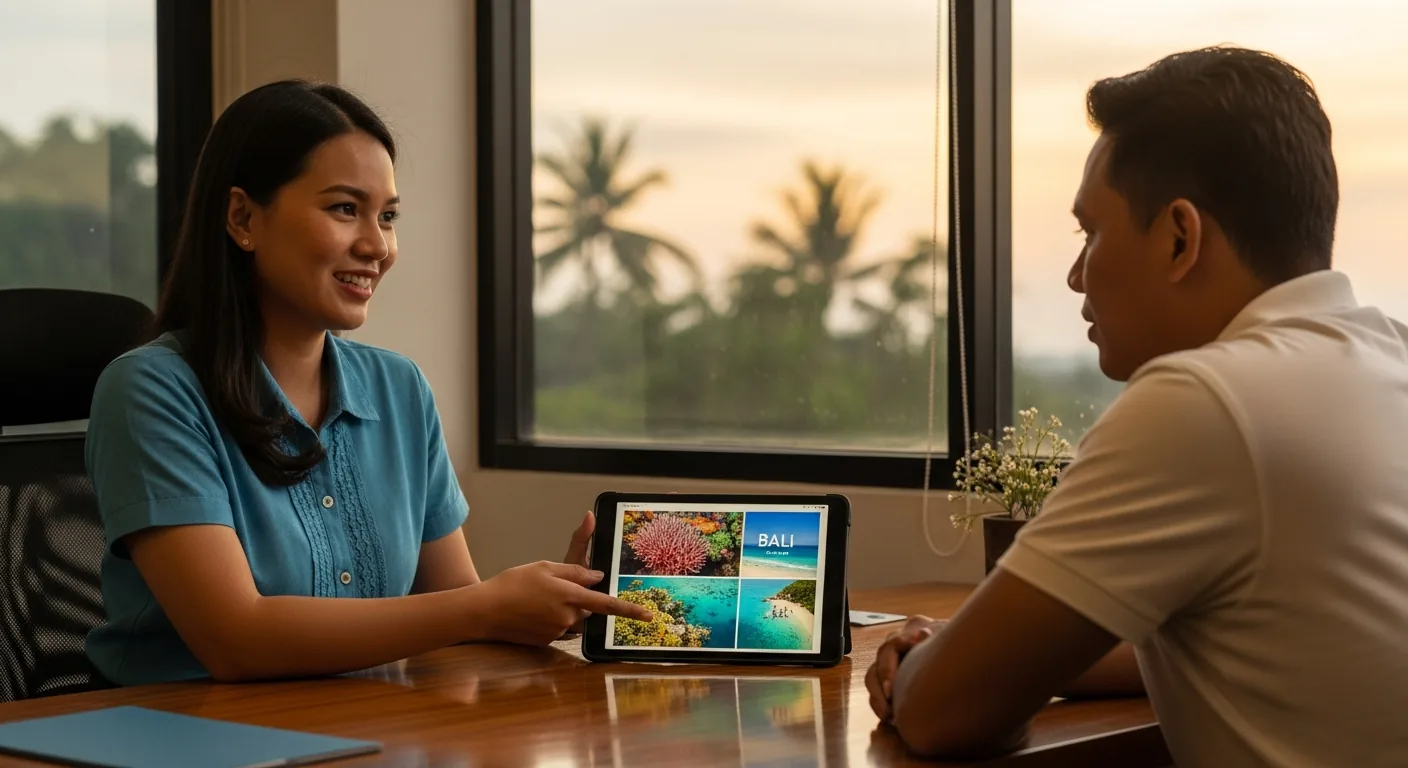
The scent of frangipani and clove incense hangs in the humid air, a sensory welcome to the Island of the Gods. You’ve just arrived at Denpasar’s Ngurah Rai International Airport (DPS) after a direct flight from Manila. Your first transaction awaits—perhaps a bottle of cold Bintang beer or a taxi to your villa in Seminyak. The vendor quotes a price in the thousands. This is your introduction to the Indonesian Rupiah (IDR), and your first step in mastering the financial landscape of your Bali escape. For the Filipino traveler, accustomed to the Philippine Peso (PHP), understanding the nuances of this currency exchange is the key to a seamless holiday. See also: our Weekend Manila Bali Itinerary.
This is not just about converting money; it’s about maximizing value and minimizing hassle. Whether you’re planning a quick weekend trip from Manila to Bali or a more extended stay, this guide provides the essential financial intelligence. We cover everything from the most favorable exchange methods for your pesos to the strategic use of credit cards and ATMs across the island, ensuring your focus remains on the experience, not the expense. The journey from the Philippines to Bali is more accessible than ever, and managing your funds should be just as straightforward. See also: Home pricing.
The Philippine Peso to Indonesian Rupiah Exchange: A Primer
The first thing to note about the Indonesian Rupiah is the number of zeroes. With an exchange rate that often hovers around 1 PHP to 280-300 IDR, a simple 5,000 PHP pocket money exchange will instantly make you a “rupiah millionaire,” holding approximately IDR 1,400,000. While this can be momentarily thrilling, it requires a mental adjustment when evaluating prices. That IDR 35,000 Nasi Goreng isn’t exorbitant; it’s a very reasonable PHP 125. See also: Contact pricing.
The official currency code is IDR, and banknotes are commonly available in denominations of 1,000, 2,000, 5,000, 10,000, 20,000, 50,000, and the largest, 100,000. Coins exist but are less frequently used in tourist transactions. Due to constant fluctuation, it’s prudent to check the live interbank rate on a platform like XE or OANDA before your departure from NAIA. This gives you a baseline to assess the rates offered by money changers, which will always include a margin or “spread” for their service. A fair spread is typically 1-3% away from the interbank rate. Anything more, especially at airport kiosks, should be approached with caution. See also: details on Direct Flights Manila Bali.
Inline FAQ: Should I bring US Dollars or Philippine Pesos to Bali?
While US Dollars are widely accepted for exchange and often yield favorable rates, bringing PHP is perfectly viable. However, you will get a better rate by changing a major currency like USD. The most cost-effective strategy is often a hybrid approach: bring a modest amount of USD (crisp, new bills of $50 or $100 denominations are preferred) for exchange upon arrival and rely on ATM withdrawals for the remainder of your cash needs. Exchanging PHP directly to IDR in Bali is possible, but fewer money changers offer this service, and the rates may be less competitive than for USD.
Securing Your Travel Funds: Exchanging PHP in Manila vs. Bali
The decision of where to exchange your currency can have a significant impact on your travel budget. The convenience of exchanging at Ninoy Aquino International Airport (NAIA) before your Manila-Bali flight comes at a premium cost. The rates are notoriously poor. A better strategy involves planning ahead. You can either exchange a small amount in Manila for immediate needs upon landing or, more advisably, wait until you are in a major Bali tourist area like Kuta, Seminyak, or Ubud.
In Bali, avoid unsolicited offers from individuals or small, unofficial-looking stalls. Stick to authorized money changers with proper signage, no-commission promises, and digital rate boards. Two of the most reputable chains, known for fair rates and transparency, are PT. Central Kuta Money Exchange (established in 1985) and BMC (Bali Maspintjinra). They have branches in all major tourist hubs. Always count your rupiah carefully at the counter before leaving and insist on a receipt. A common scam at less reputable changers involves quick-counting or “accidentally” dropping notes to short-change customers.
Comparison: Currency Exchange Options
| Exchange Location | Pros | Cons | Typical Rate Spread |
|---|---|---|---|
| NAIA Terminals, Manila | Convenient for immediate cash upon landing. | Very poor exchange rates; high commission/spread. | 5% – 10% below interbank rate. |
| Philippine Banks (e.g., BDO, BPI) | Secure and reliable. | May not hold large amounts of IDR; requires pre-ordering; rates are often not competitive. | 3% – 5% below interbank rate. |
| Denpasar Airport (DPS), Bali | Immediate access to IDR upon arrival. | Rates are better than NAIA but worse than in town. | 4% – 7% below interbank rate. |
| Reputable Bali Money Changers (e.g., Central Kuta) | Excellent, competitive rates; transparent process. | Requires travel from the airport into a tourist area. | 1% – 2.5% below interbank rate. |
The Convenience of Plastic: Using Credit and Debit Cards in Bali
For many travelers from the Philippines to Bali, credit and debit cards offer a secure and convenient way to pay. Visa and Mastercard are widely accepted in mid-to-high-end hotels, restaurants, boutiques, and larger tour operators, especially in southern Bali (Seminyak, Canggu, Nusa Dua). However, for smaller warungs (local eateries), market stalls, or interactions with local drivers, cash remains king.
Before you depart on your Manila to Bali flight, it is imperative to inform your bank of your travel dates. This prevents your card from being flagged for suspicious overseas activity. Inquire about their specific foreign transaction fees. Most major Philippine banks, including BDO and BPI, charge a fee which is typically a combination of the network’s fee (from Visa/Mastercard) and the bank’s own service charge, usually totaling between 1.75% and 2.5% of the transaction amount.
An important term to know is Dynamic Currency Conversion (DCC). When paying with your card, a terminal may ask if you want to pay in PHP or IDR. Always choose to pay in the local currency (IDR). If you choose PHP, the merchant’s bank performs the conversion at a significantly less favorable rate than your own bank’s. This is a common and costly trap for unaware travelers.
Inline FAQ: Is my GCash card usable in Bali?
Yes, the GCash Card, which operates on the Visa or Mastercard network, can be used for payments and ATM withdrawals in Bali wherever its network is accepted. It functions like any other debit card. However, be mindful of the associated fees for international transactions and withdrawals, which are outlined in the GCash app. It’s a viable option, but compare its fees to your primary bank’s debit card to see which is more economical.
ATM Withdrawals: Accessing Cash from Denpasar to Uluwatu
Using your Philippine-issued ATM card is one of the most efficient ways to get Indonesian Rupiah. ATMs are ubiquitous in Bali’s populated areas. For reliability and security, stick to ATMs attached to a bank branch. Major Indonesian banks like BCA (Bank Central Asia), Mandiri, BNI (Bank Negara Indonesia), and CIMB Niaga are excellent choices.
There are a few key factors to consider for ATM use:
- Withdrawal Limits: Most Indonesian ATMs have a per-transaction limit, typically between IDR 1,500,000 and IDR 3,000,000. ATMs dispensing IDR 100,000 notes usually have higher limits than those with IDR 50,000 notes. Your Philippine bank will also have its own daily withdrawal limit (e.g., PHP 50,000).
- Fees: You will likely incur two fees per withdrawal. The first is from the local Indonesian bank (a network access fee), and the second is from your home bank in the Philippines for the foreign withdrawal. These fees can range from PHP 150 to PHP 250 per transaction, so it’s more economical to make fewer, larger withdrawals than multiple small ones.
- Skimming: While not rampant, ATM skimming can occur. Always use machines in well-lit, secure locations. Shield the keypad when entering your PIN and check the card slot for any unusual attachments before inserting your card.
Inline FAQ: How much cash should I bring for a 3-day weekend trip to Bali?
For a 3-day trip from Manila, a good starting point is to have around IDR 1,500,000 to IDR 2,000,000 (approx. PHP 5,200 – PHP 7,000) in cash per person. This comfortably covers meals at local warungs, transportation via apps like Gojek, entrance fees to temples like Uluwatu (IDR 50,000), and small market purchases. You can then use your credit card for larger expenses like hotel bills and upscale dining.
A Sample Weekend Budget: Planning Your Expenditures from NAIA to Denpasar
A well-planned trip from the Philippines to Bali requires a realistic budget. The direct flight from NAIA to Denpasar, often operated by carriers like Cebu Pacific (e.g., flight 5J 279) or Philippine Airlines, takes approximately 4 hours, making a weekend escape entirely feasible. Here is a sample budget to help you plan your finances. Note that as of February 14, 2024, all foreign tourists are required to pay a one-time tourism levy of IDR 150,000 upon arrival.
Sample 3-Day/2-Night Weekend Itinerary Budget (Per Person, Mid-Range)
- Accommodation: (Mid-range hotel/villa in Seminyak) IDR 800,000/night x 2 nights = IDR 1,600,000
- Food & Beverage: (Mix of cafes and warungs) IDR 400,000/day x 3 days = IDR 1,200,000 (This covers daily coffee, three meals, and a Bintang beer or two).
- Transportation: (Gojek/Grab for short trips, one half-day private driver) IDR 600,000 = IDR 600,000
- Activities & Entrance Fees: (Beach clubs, temple visits) IDR 500,000 = IDR 500,000
- Bali Tourism Levy: IDR 150,000
- Miscellaneous: (Shopping, tips) IDR 450,000 = IDR 450,000
Total Estimated Cost: IDR 4,500,000 (Approximately PHP 15,750 or USD 270), excluding flights.
Inline FAQ: Are prices in Bali negotiable?
In stores with fixed price tags, like Circle K or high-end boutiques, prices are not negotiable. However, at local markets such as the Ubud Art Market or Sukawati Art Market, haggling is expected and part of the culture. A respectful opening offer is typically 50% of the asking price, with the final price landing somewhere in the middle.
Seamless Bali Arrangements with Manila to Bali Travel Guide
logistics of a trip to Bali from Manila, from currency to transport, can be complex. The Manila to Bali Travel Guide specializes in creating frictionless travel experiences for the Filipino market. Our on-the-ground presence in Bali and deep understanding of the needs of travelers from the Philippines allows us to provide curated advice and services that standard booking platforms cannot match.
Our concierge services are designed to handle the details, so you can immerse yourself in your holiday. This includes:
- Private Airport Transfers: A driver waiting for you at Ngurah Rai (DPS) to take you directly to your accommodation, with no currency or taxi negotiation stress upon arrival.
- Vetted Private Drivers: Full-day or half-day car charters with English-speaking drivers who understand your desired itinerary, priced transparently from IDR 600,000 for 8-10 hours.
- Villa & Hotel Bookings: Access to a curated list of properties that meet our standards for quality, location, and value.
- Activity & Tour Coordination: Pre-booking for popular activities, from surf lessons in Canggu to cooking classes in Ubud, ensuring availability and fair pricing.
Booking Your Bali Services: A Step-by-Step Process
- Initial Consultation: Contact us via email or phone with your travel dates and requirements for your Bali from Manila trip.
- Custom Proposal: We will provide a detailed proposal with transparent pricing for the services you require (e.g., airport transfer, 3-day driver hire).
- Confirmation & Deposit: Once you approve the itinerary, a secure payment link is sent for a confirmation deposit.
- Final Details: You will receive all booking vouchers, driver contact details, and a pre-departure guide, including the latest currency advice.
Contact Our Bali Office
For bespoke travel planning and on-the-ground support, connect with our team.
Brand: Manila to Bali Travel Guide
Phone: +6281-1394-14563
Email: [email protected]
Office: Jalan Sunset Road No. 88, Kuta, Badung, Bali 80361, Indonesia
As a registered Indonesian travel entity (PT Juara), we provide the security and accountability you need for a well-managed holiday.
Frequently Asked Questions on Bali Currency for Filipinos
What is the best way to carry money in Bali?
A combination strategy is best. Carry a primary credit card for large purchases, a debit card for ATM withdrawals, and enough exchanged cash (either from USD or from an ATM withdrawal) for at least 2-3 days of small expenses. This minimizes risk and ensures you’re prepared for any situation.
Can I use e-wallets like GCash or Maya QR Ph in Bali?
Direct QR Ph payments are not yet widely integrated in Bali. While some vendors may accept payments via services like Alipay or WeChat Pay (if your e-wallet has a partnership), it is not a reliable primary payment method. The Indonesian standard is QRIS, which is not directly compatible with GCash or Maya for point-of-sale scanning. Rely on your GCash card for card transactions and ATM withdrawals instead.
How much is the airport taxi from Denpasar (DPS) to Seminyak?
An official airport taxi to Seminyak typically costs between IDR 150,000 and IDR 200,000. Using a ride-hailing app like Gojek or Grab from the designated airport pickup zone is often cheaper, with fares ranging from IDR 80,000 to IDR 120,000, depending on traffic and demand. Pre-booking a private transfer offers the most convenience for a fixed price.